

Should You Remove or Cover Popcorn Ceilings?

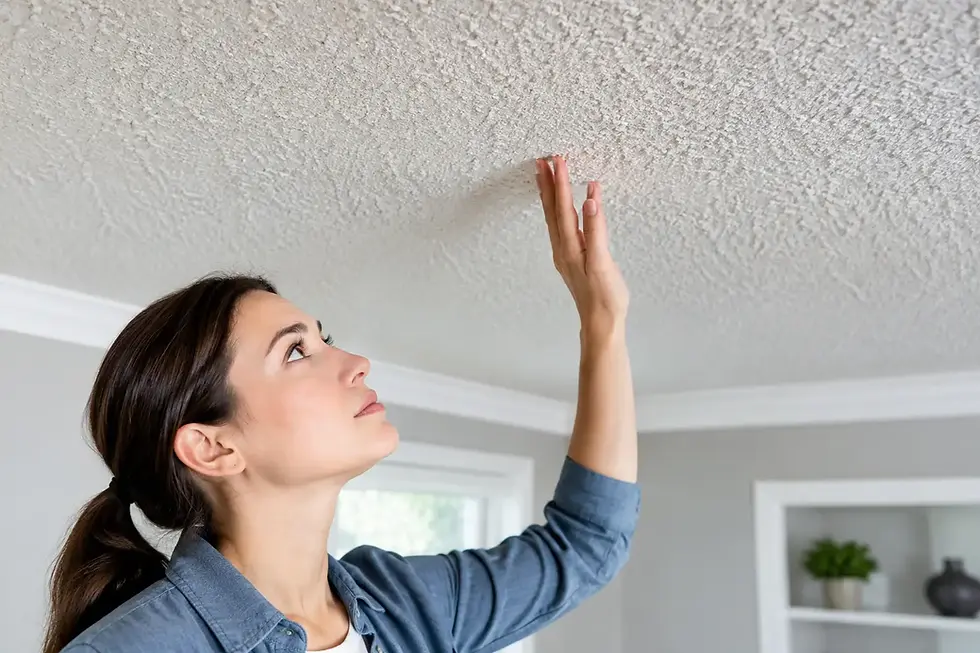
A popcorn ceiling can make an otherwise well-kept room feel dated, dark, or difficult to renovate. It also creates a practical problem: once the texture is damaged by a leak, repair, new light fixture, or ceiling crack, blending it back in without obvious patches is not easy. For many Lower Mainland homeowners, the question is not simply whether popcorn ceilings are in style. It is whether removal, repair, or covering is the right investment for the home.
The honest answer depends on the ceiling’s age, condition, height, the room below it, and what you want the finished space to feel like. A careful assessment before work begins protects your budget, your belongings, and your indoor air quality.
Why popcorn ceilings deserve a closer look
Popcorn texture, also called acoustic or stipple texture, was widely used because it helped disguise drywall seams and minor imperfections. It was fast to apply, forgiving during construction, and offered modest sound absorption. In many homes, it has held up reasonably well for decades.
The drawbacks tend to show up during renovation. The texture catches shadows, can make low ceilings feel lower, and collects dust and cobwebs more readily than a smooth finish. It is also difficult to paint evenly. When a ceiling needs patching, matching the original pattern can be possible, but the repaired area may still stand out depending on the existing texture, paint sheen, and lighting.
That does not mean every textured ceiling needs to come down. A clean, intact ceiling in a rental suite, garage, or secondary room may be perfectly practical to keep. But in a main living area, kitchen, hallway, or renovated basement, a smooth ceiling can make the whole room feel brighter and more current.
Test before removing popcorn ceilings
This is the step homeowners should never skip. Some older ceiling textures may contain asbestos, particularly in homes built before the mid-1980s, though materials installed later can also be a concern. You cannot identify asbestos by looking at the texture, its colour, or how easily it scrapes off.
Before sanding, scraping, drilling multiple holes, or beginning a removal project, arrange for a representative sample to be tested by a qualified laboratory. If the result is positive, the work should be handled through proper containment and abatement procedures by trained professionals. Dry scraping or sanding a suspect ceiling creates unnecessary risk by putting fibres into the air.
Testing is a small cost compared with the consequences of disturbing hazardous material improperly. It also gives you a clear path forward. If the result is negative, the contractor can plan removal with the right dust controls. If it is positive, you can make an informed decision about professional abatement, encapsulation, or covering the ceiling.
Water damage deserves the same level of caution. A brown stain, sagging area, or soft drywall is not only a cosmetic issue. The source of moisture must be corrected first. Finishing a ceiling before addressing a roof leak, plumbing leak, or condensation issue only hides a problem that will return.
Removal gives the cleanest finished result
When the ceiling is asbestos-free and the drywall beneath is in reasonable shape, removal is often the best option for homeowners who want a truly smooth, modern finish. The existing texture is carefully softened where appropriate, removed, and contained. The ceiling is then repaired, taped where needed, skim coated, sanded, primed, and painted.
The key word is preparation. Removing texture exposes the real condition of the drywall. Old seams, fastener pops, cracks, uneven joints, and previous repairs often become visible once the stipple is gone. A proper finish may require more than a quick scrape and a coat of paint.
This is why a removal quote can vary from one home to another. A flat ceiling with sound drywall and easy access is very different from a ceiling with several repairs, heavy paint buildup, cathedral sections, or rooms full of furniture. The best approach is to assess the scope in person and explain what the finished surface will require before the work starts.
For homeowners, the benefit of doing the prep properly is simple: the ceiling looks smooth from every angle, including in the natural side light that exposes flaws near windows. Rushing this stage can leave waves, visible joints, or sanding marks that are difficult to ignore once the room is repainted.
Covering a popcorn ceiling can be the smarter choice
Removal is not always the right answer. Covering the existing ceiling with new drywall can be a practical option when the texture is heavily painted, the original ceiling is uneven, asbestos-containing material is present, or the project calls for additional sound control.
A new layer of drywall creates a fresh, consistent surface that can be finished to the desired level of smoothness. It can also make sense when a ceiling has extensive cracking or patchwork that would take significant labour to correct after scraping. In some cases, it offers better value than trying to restore a poor substrate.
There are trade-offs. Adding drywall lowers the ceiling slightly, which may matter in basements or rooms with limited height. Pot lights, light fixtures, vents, smoke alarms, crown moulding, doors, and wall trim may also need adjustment. A contractor should look at these details before recommending an overlay rather than treating it as a one-size-fits-all solution.
Covering is not a shortcut around safety requirements. If asbestos is suspected or confirmed, the proposed work still needs to be planned carefully so the existing material is not disturbed unnecessarily.
When repair and texture blending make sense
If only one section of a popcorn ceiling is damaged, full removal may be more work than the room needs. A localized repair can be a sensible choice after a small plumbing repair, electrical access opening, or minor ceiling crack.
The challenge is blending. Texture varies in size, density, and pattern, especially in older homes where different rooms may have been finished at different times. Paint age and sheen also affect how noticeable a repair looks. A skilled ceiling repair involves restoring the drywall base first, applying a compatible texture, then feathering and painting in a way that reduces visible transitions.
Expect some honesty here: a perfectly invisible match is not always realistic, particularly on a ceiling with faded paint or an unusual hand-applied pattern. In many cases, painting the entire ceiling after the repair delivers the most uniform result. It is a better outcome than touching up one small area and hoping it disappears in changing light.
What a professional ceiling project should include
Ceiling work is messy by nature, but it should not leave your home feeling like a construction site for weeks. Good workmanship starts with protecting floors, furniture, walls, doorways, and HVAC openings before dust-producing work begins. It continues with controlled removal, careful disposal, thorough cleanup, and clear communication about access, drying time, and painting.
Ask how the contractor will manage dust, what repairs are included after texture removal, and whether primer and paint are part of the scope. Also ask who will be responsible for moving or protecting furniture, removing and reinstalling fixtures, and addressing surprises such as hidden cracks or moisture damage. Clear answers prevent the frustrating gaps that can appear between demolition, drywall finishing, and painting.
At Devlin Drywall, the goal is not to push every homeowner toward removal. It is to recommend the option that gives you a dependable finish for the condition of your ceiling, the use of the room, and the budget you have set aside.
A ceiling is a large, uninterrupted surface, so small finishing flaws can become very visible. Whether you choose to preserve the texture, repair a damaged area, cover it, or remove it entirely, start with testing where needed and a realistic plan for the finish underneath. That extra care is what turns a dusty renovation job into a room you are happy to look up at.


Comments