
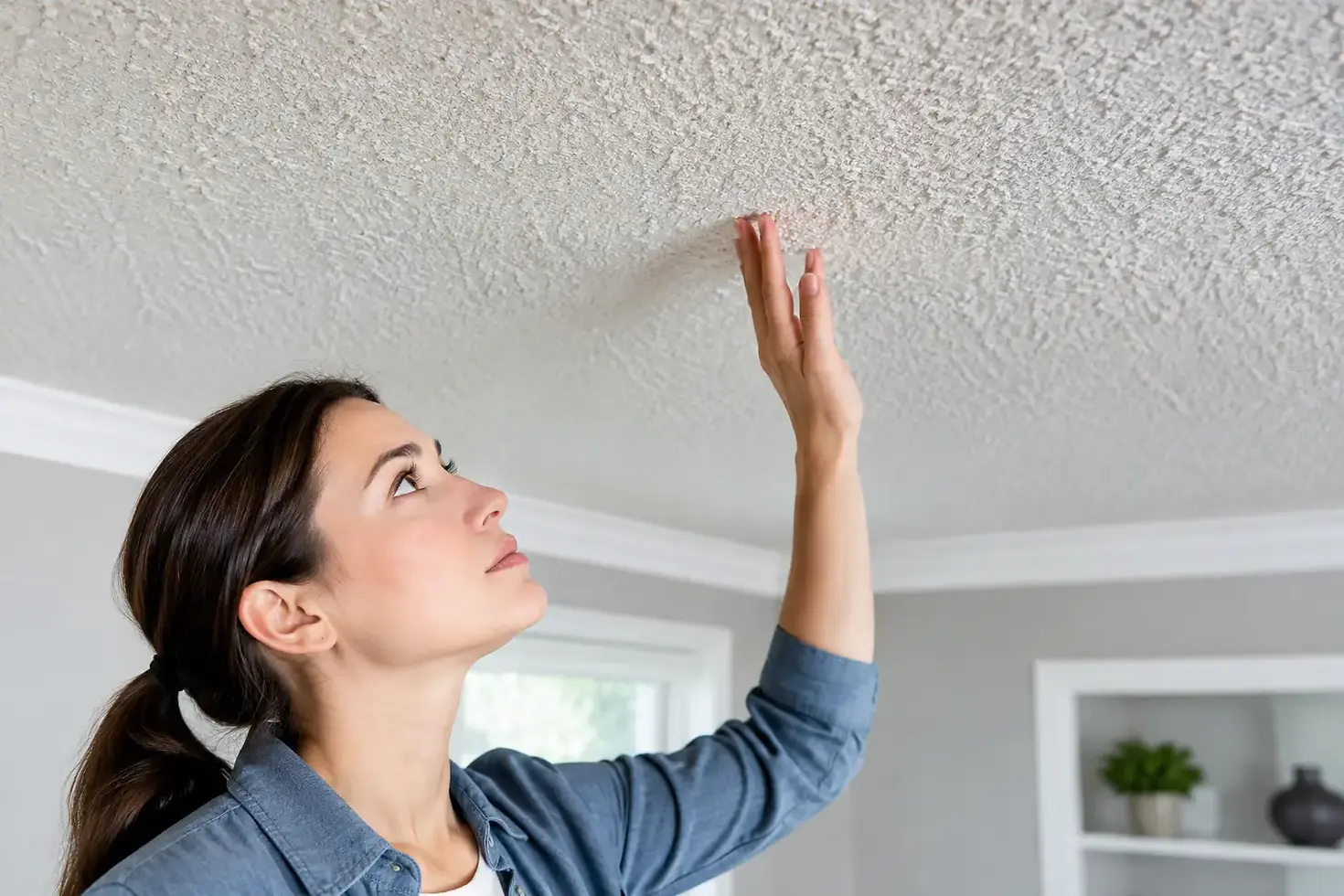
Are Popcorn Ceilings Hazardous in Your Home?

A textured ceiling can make an otherwise tidy room feel dated, but the decision to remove it should not begin with a scraper. Are popcorn ceilings hazardous? Sometimes, particularly when an older ceiling contains asbestos and the texture is disturbed. The texture itself is not automatically dangerous, and a smooth ceiling is not automatically safer. What matters is what the material contains, its condition, and the work planned around it.
For homeowners planning a kitchen update, basement renovation, or full ceiling refresh, the safest first step is simple: pause before sanding, drilling, scraping, or cutting into the texture.
Are popcorn ceilings hazardous when left alone?
A popcorn ceiling that is intact, undamaged, and left undisturbed generally does not release fibres into the air. This is why a ceiling should not be treated as an emergency simply because it has a stippled or sprayed texture. The concern begins when the coating is broken apart.
Asbestos was added to some building materials for its heat resistance and durability. In certain older textured ceiling finishes, it may be present in the texture coat, in joint compound beneath it, or in other materials involved in the ceiling assembly. When asbestos-containing material is scraped, sanded, drilled, demolished, or allowed to deteriorate, tiny fibres can become airborne. Those fibres are too small to see, and they can remain suspended long after visible dust has settled.
That is why a well-intended DIY removal can create a much larger problem than the ceiling itself. Dry scraping and sanding are especially risky because they generate dust throughout the room and can spread it into adjoining areas through foot traffic or air movement.
Age can raise the question, but it cannot answer it
Many British Columbia homes have been renovated more than once. A house may have a newer paint colour over an original textured ceiling, or a previous owner may have patched one section with newer material. Looking at the texture, its colour, or the year the home was built cannot confirm whether asbestos is present.
Older homes deserve more caution because asbestos-containing materials were used more commonly in past decades. However, age is only a reason to test, not a diagnosis. Newer-looking popcorn texture can still sit over an older compound, and an older ceiling may test clear. The only reliable way to know is through sampling and laboratory analysis.
This distinction protects both homeowners and contractors. Guessing that a ceiling is safe can expose people unnecessarily. Assuming every textured ceiling contains asbestos can lead to needless expense and worry. A proper test replaces both assumptions with a clear plan.
Other ceiling issues can matter too
Asbestos is the main safety question homeowners associate with popcorn ceilings, but it is not the only one. Water staining, soft spots, or sagging texture can point to an active leak or moisture problem above the ceiling. Painting over that damage may improve the appearance briefly while allowing mould, damaged drywall, or a roof or plumbing issue to continue.
Older paint layers can also require caution, particularly if the renovation involves scraping or creating widespread dust. And even where asbestos is not present, drywall dust, old insulation debris, and damaged texture are not materials anyone wants circulating through a finished home. Clean containment and proper cleanup still matter.
Test before you plan popcorn ceiling removal
If you are considering removal, repairs, recessed lighting, a ceiling fan, new pot lights, or demolition, arrange testing before the work is scheduled. Testing should also be considered when the ceiling has been damaged and needs a repair that will require cutting, sanding, or blending the texture.
A qualified asbestos professional can take representative samples safely and send them to an accredited laboratory. If the room has patches or visibly different texture areas, more than one sample may be needed. This is not an area for a single guess based on one corner of the room.
Until results are available, avoid disturbing the ceiling. Do not sand a small spot to “see what is underneath,” scrape a sample into a bag, or drill holes for a lighting layout. Home test kits may seem convenient, but reliable sampling and interpretation are worth doing properly when your household and renovation budget are involved.
If testing identifies asbestos, the scope of work changes. Removal should be handled by a qualified asbestos abatement contractor using the required containment, air-control, protective equipment, disposal procedures, and clearance process for the specific job. Once the area has been properly cleared, ceiling repairs, boarding, skim coating, and finishing can move ahead safely.
Your options after the results
A clear test gives you flexibility. Full popcorn ceiling removal is a popular choice because it creates a cleaner, more current look and makes future painting easier. It can also reveal and correct cracks, seams, uneven framing, or previous patchwork that texture once concealed. The trade-off is that removal and refinishing are detail-heavy work. A ceiling can look worse than before if it is not repaired, skimmed, primed, and painted to a consistent finish.
In some cases, covering an existing textured ceiling with new drywall is the better option. This may make sense when the existing ceiling is uneven, heavily damaged, or impractical to strip. It avoids the mess of removing every bit of texture, although it can slightly reduce ceiling height and requires careful attention around crown moulding, lighting, vents, and door casings.
Skim coating over a tested, stable texture may be possible in selected situations, but it depends on how securely the texture is bonded and how heavy the pattern is. A professional assessment can prevent the common disappointment of a fresh smooth coat cracking or releasing because the layer below was failing.
If asbestos is found and removal is not necessary, leaving the ceiling undisturbed or using an appropriate encapsulation approach may be recommended. The right choice depends on the condition of the ceiling and whether planned renovations will affect it. There is no single best answer for every home.
What clean, careful ceiling work should look like
Even when testing confirms that asbestos is not present, ceiling removal is dusty work. Homeowners should expect a contractor to protect floors, furniture, doorways, and nearby finishes before removal begins. Dust barriers, controlled work areas, appropriate extraction, and thorough cleanup are practical signs that the job is being managed with respect for the home.
The finish matters just as much as the preparation. Once texture comes down, ceilings often reveal joints, nail pops, cracks, old repairs, and areas that are not level. Correcting those flaws takes proper drywall finishing, drying time between coats, careful sanding, and the right primer before paint. Rushing any of those steps can leave visible lines or flashing that becomes obvious in daylight or under pot lights.
At Devlin Drywall, the focus is not simply on taking down a texture. It is on protecting the space, addressing what the texture was hiding, and leaving the ceiling with a finish that looks intentional from every angle.
A practical next step for BC homeowners
If your popcorn ceiling is in good condition and you have no plans to disturb it, there may be no immediate reason to act. Keep an eye on water damage, cracking, or areas that begin to loosen. If renovation work is on the horizon, build testing into the early planning stage rather than treating it as a last-minute obstacle after furniture has been moved and trades are booked.
A test result may feel like one more item on the renovation list, but it gives you something far more useful than a quick answer: confidence to make the right decision for your home. Whether the next step is safe removal, a repair, a new ceiling surface, or leaving an intact finish alone, start with facts and let the work follow from there.



Comments