
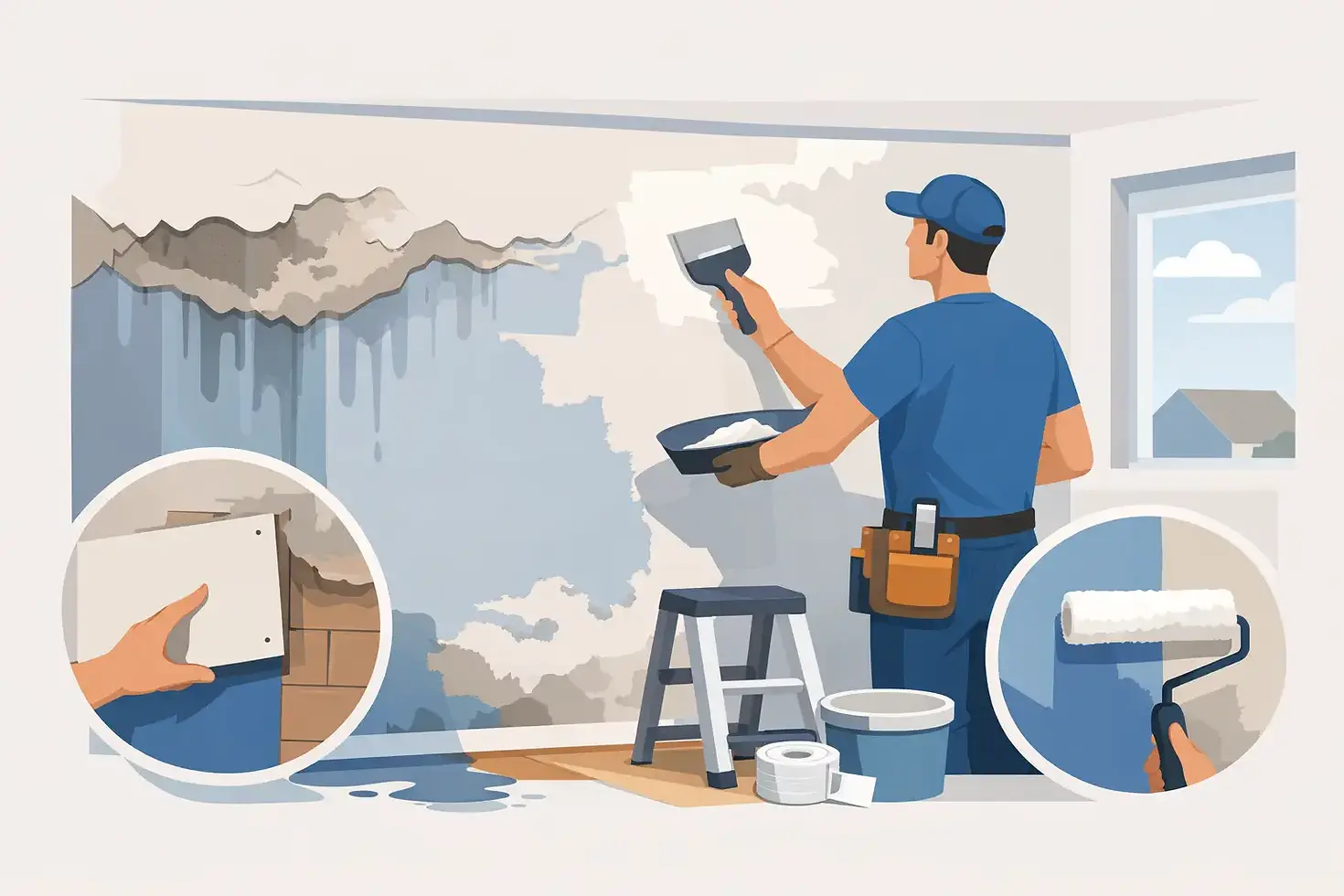
Water Damaged Drywall Repair Done Right
- Devlin Drywall

- Jun 16
- 6 min read
A brown ceiling stain after a roof leak or a soft wall below a bathroom pipe can look minor at first. Then the paint starts to bubble, the drywall feels spongy, and suddenly water damaged drywall repair becomes less about cosmetics and more about protecting the rest of the room from hidden damage.
Done properly, this kind of repair is not just a patch-and-paint job. It starts with finding out whether the drywall is still sound, whether moisture is trapped behind it, and whether the finish can actually be blended so the repair disappears instead of announcing itself every time the light hits the wall.
What water does to drywall
Drywall is durable in normal conditions, but it does not respond well to prolonged moisture. The gypsum core absorbs water, the paper face weakens, and joints and fastener areas often show damage first. In some cases the issue stays local, like a single stained patch under a one-time leak. In other cases, the problem spreads farther than the visible mark suggests.
That is why the appearance alone can be misleading. A stain does not always mean the drywall needs to come out, but a clean-looking surface does not always mean it is safe to keep either. If the board is swollen, sagging, crumbling, mouldy, or soft to the touch, replacement is usually the better call.
Ceilings are especially unforgiving. Water adds weight, and damaged ceiling board can lose strength quickly. A ceiling that has started to bow or separate at seams should be treated as a repair priority, not something to watch for a few more weeks.
When water damaged drywall repair is possible
There are situations where repair makes sense and situations where replacement is the responsible option. The difference usually comes down to three things: how much water got in, how long it sat there, and whether the source has been fully fixed.
If the leak was brief, the drywall dried quickly, and the board is still firm and flat, the repair may be limited to stain treatment, minor surface correction, and refinishing. This is the best-case scenario. It saves cost, reduces disruption, and still restores the appearance of the room.
If the drywall has lost its shape or strength, replacement is usually the smarter investment. Trying to preserve badly compromised board can create a bigger bill later, especially if the surface continues to fail or if trapped moisture leads to recurring issues behind the wall.
There is also an in-between category. Sometimes part of a wall or ceiling can stay, while a localized section needs to be cut out and replaced. That approach works well when the damage is contained and the surrounding material remains dry and stable.
Why drying comes before patching
One of the biggest mistakes in water damaged drywall repair is fixing the surface before the assembly is actually dry. New mud, primer, and paint may make things look better for a short time, but if moisture is still present, staining, bubbling, and deterioration often come back.
A proper repair starts with the source. Roof leak, plumbing issue, window failure, condensation problem, or exterior moisture entry - whatever caused the damage needs to be solved first. After that, the area needs time and airflow to dry. Depending on the extent of the moisture, that might mean fans, dehumidification, selective removal of wet material, or opening parts of the assembly so hidden dampness can escape.
This is where experience matters. Overcutting creates unnecessary mess and cost. Undercutting can leave damp material behind. The right approach is careful, measured, and based on the actual condition of the wall or ceiling, not guesswork.
How a professional repair usually works
The goal is not just to remove damaged material. The goal is to restore a clean, solid surface that blends with the rest of the room.
First, the damaged section is assessed and marked out. If replacement is needed, the compromised drywall is cut back to a sound area. Insulation and framing may also need to be checked, especially after larger leaks. If there are signs of mould or ongoing moisture, that has to be addressed before closing the wall back up.
Once the area is dry and ready, new drywall is installed to fit cleanly. From there, the finishing stage matters as much as the board itself. Taping, mudding, sanding, and feathering need to be done carefully so the repair does not leave a visible hump, dip, or flashing edge under paint.
Ceilings and textured surfaces add another layer of difficulty. Matching a smooth wall is one thing. Matching existing texture, patching around lighting, or blending into an older ceiling so the repair disappears is where many otherwise decent repairs fall apart.
That is often the difference between a general patch and a specialist finish. The board may be new, but if the final surface catches the eye from across the room, the job is not really finished.
The trade-off between spot repair and full replacement
Homeowners often ask whether it is better to repair one section or redo a whole wall or ceiling plane. The honest answer is that it depends.
Spot repair is more economical when the damage is isolated and the existing finish is in good shape. It keeps the scope smaller and can deliver an excellent result when the blending is done properly.
A larger replacement can make more sense when there are multiple damaged areas, recurring joint cracks, heavy staining, or an older texture that cannot be matched cleanly. In those cases, trying to save every square foot may cost less upfront but leave a more noticeable final appearance.
There is also the matter of paint. Even if the drywall repair itself is excellent, surrounding paint may need to be redone for a uniform result. That is not upselling. It is simply the reality of colour, sheen, and aging on existing surfaces.
Common situations in homes
In residential work, water damage tends to show up in predictable places. Bathroom leaks often affect ceilings below. Kitchen line failures can damage wall cavities and bulkheads. Basement moisture can soften lower wall sections. Window leaks can cause localized staining and paper lift near corners and sills. Roof issues often appear first as ceiling stains but may spread farther along framing paths than expected.
Each of these calls for a slightly different repair strategy. A ceiling under a one-time plumbing leak may only need a localized cutout and refinish. A basement wall with repeated moisture exposure may need more than drywall work if the underlying moisture condition has not been corrected. Good advice here should be practical, not generic.
That is one reason many homeowners prefer working with a contractor who handles repair work regularly instead of treating it like an afterthought. Water damage is rarely just a board swap. It involves judgment, finish quality, cleanliness, and a clear explanation of what is worth repairing versus what should be replaced.
What to look for before hiring someone
If you are bringing in a drywall contractor for this kind of work, look beyond the promise of a quick patch. Ask how they determine whether drywall can be saved. Ask how they handle texture blending, dust control, and final finish quality. Ask whether they will tell you plainly if the leak source still needs attention before the drywall is closed up.
You want someone who respects your home as much as the repair itself. Water damage is already disruptive. The repair process should bring things back under control, not add avoidable stress through poor communication, sloppy prep, or an obvious final patch.
For many homeowners, this is also where trust matters more than speed. A fast cosmetic fix can be tempting, but a careful repair is what protects the room long term. At Devlin Drywall, that means looking at the full condition of the surface, recommending the scope honestly, and finishing the work so it looks right when the job is done.
A clean result should still be a durable one
The best water damaged drywall repair leaves you with more than a wall that looks fresh on the day of painting. It should feel solid, blend properly, and give you confidence that the problem was handled at the right level.
If you are dealing with a stain, sagging ceiling, or a soft section of wall, do not assume the smallest patch is always the best answer. The right repair is the one that fits the actual damage, protects the rest of the space, and restores the finish without shortcuts. That is what makes the room feel normal again.


Comments