

Burnaby Condo Drywall Repairs That Blend In

A small dent beside a doorway, a crack above a window, or a water stain on the ceiling can make an otherwise well-kept suite feel unfinished. Burnaby condo drywall work is rarely just about filling a hole and adding paint. In a strata building, the repair needs to respect the home, nearby residents, building rules, and the existing finish that makes a repair either disappear or stand out.
For condo owners, the best result comes from treating drywall as a finishing trade, not a quick patch job. A clean workspace, clear communication, proper protection, and a careful match to the surrounding wall or ceiling matter just as much as the repair itself.
Why Condo Drywall Work Needs a Different Approach
A detached home gives a contractor more room to work and fewer restrictions around noise, access, debris, and drying time. A condo has shared hallways, elevators, neighbours on the other side of the wall, and often a strata council or property manager with specific renovation procedures.
Before work starts, an owner may need to arrange elevator protection, book loading access, provide proof of insurance, or notify building management. Some buildings restrict noisy work to certain hours. Others have requirements for flooring protection and debris removal. These details are not red tape to ignore. They protect the building and help keep your renovation or repair from becoming a problem for your neighbours.
The physical construction can also be different. Condo walls may contain steel studs, concrete surfaces, plumbing chases, electrical runs, or fire separations. Ceilings may be part of an assembly designed for sound control or fire resistance. Cutting into a wall without understanding what is behind it can turn a straightforward repair into an expensive surprise.
That does not mean every small repair requires a major investigation. A minor impact hole in a non-structural interior partition is usually simple. But when damage is large, recurring, close to plumbing, or on a shared wall or ceiling, it pays to slow down and assess the cause before closing anything up.
The Problems We See Most Often in Burnaby Condos
Drywall damage usually tells a story. The visible crack or stain is the final symptom, not always the source of the problem.
Cracks Around Corners, Doors, and Windows
Hairline cracks can appear as a building settles, materials expand and contract, or doors are used heavily. In some cases, the issue is simply failed joint tape or a previous repair that was rushed. The right repair depends on whether the crack is stable. Filling over an active crack may look good briefly, then reopen when the underlying movement continues.
A qualified drywall specialist will look at the crack pattern, its location, and whether there are related signs nearby. A straight seam crack often points to a tape or joint issue. A wider crack, repeated movement, or doors that suddenly stick may call for a closer look before cosmetic repairs are made.
Water Stains and Soft Drywall
A yellow-brown ceiling stain after a leak is not something to paint over and forget. The water source must be resolved first, whether it came from a neighbour above, a plumbing line, an appliance, or an exterior issue. In a strata property, that may involve the property manager, the strata corporation, and insurance providers depending on where the leak began.
Once the area is dry and the source is confirmed, damaged drywall may need to be removed. Soft gypsum, mould growth, sagging board, or compromised insulation should not be sealed behind new compound. The repair should restore a sound surface before stain blocking, priming, and painting are considered.
Holes, Dents, and Poor Previous Patches
Moving furniture, installing shelves, changing light fixtures, and everyday life can leave walls marked up. Small holes can often be repaired efficiently, but larger openings need backing and proper board replacement. The difference shows up later. A patch that flexes, has visible edges, or is built up with too much compound will be noticeable once light hits it from an angle.
Poor repairs are especially common on smooth walls. A wall can feel flat to the hand and still show a raised patch in afternoon sunlight or beneath pot lights. Proper feathering is what prevents that telltale repair outline.
Ceiling Texture and Popcorn Ceiling Repairs
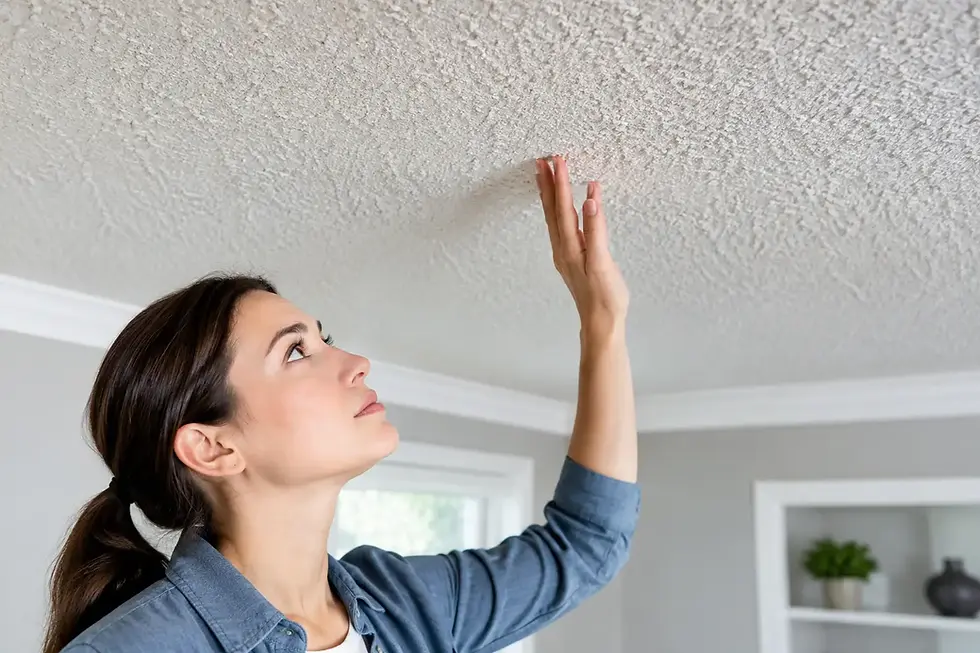
Texture matching is one of the most demanding parts of condo drywall repair. Orange peel, knockdown, stipple, and older popcorn textures all have their own pattern, thickness, and application method. A patch can be technically sound yet look wrong because the texture is too heavy, too fine, or applied only to the damaged area without blending the surrounding field.
Older popcorn ceilings deserve extra caution. Before scraping or disturbing a ceiling texture in an older unit, testing may be appropriate. The age of the building, the material, and the scope of disturbance all affect the sensible next step. A professional should never promise a clean modern ceiling finish without discussing preparation, containment, and what the existing surface reveals once texture is removed.
What a Quality Repair Process Looks Like
The goal is not to make the damaged spot merely acceptable. It is to make the finished wall or ceiling look consistent with the rest of the room.
Work should begin with protection. Floors, furniture, cabinets, and nearby finishes need to be covered or masked carefully. In a lived-in condo, dust control is a service issue, not an optional extra. Drywall sanding creates fine dust that travels easily, so contained work areas, careful sanding practices, and a thorough cleanup make a real difference.
Next comes preparation. Loose material is removed, damaged board is cut back to solid edges, and the repair is reinforced where needed. For cracks and seams, this often means using tape correctly rather than simply applying compound over the surface. For larger holes, a properly secured drywall patch prevents movement and helps the repair stay sound over time.
Finishing takes patience. Joint compound is applied in controlled coats, with each layer allowed to dry before sanding and refinishing. Rushing this stage can create shrinkage, ridges, pinholes, and flashing under paint. On smooth walls, the finished area often needs to extend well beyond the original damage so the transition disappears.
The last step is visual matching. That may include texture blending, spot priming, full-wall painting, or repainting a larger ceiling section. Spot painting can work when the paint is recent and touch-up material is available. In many condos, though, paint has faded slightly over time, and a larger paint area produces the more natural result.
When Fire and Sound Ratings Matter
Condo owners should be cautious about altering walls or ceilings near shared suites, corridors, mechanical rooms, or electrical panels. These assemblies may contribute to the building's fire separation or sound control. Replacing drywall with the wrong thickness, leaving gaps around penetrations, or removing material without restoring the assembly properly can create issues beyond appearance.
This is particularly relevant when installing pot lights, opening a wall for wiring, repairing a ceiling after a leak, or renovating around a bathroom or kitchen. Fire-rated drywall, sound-dampening drywall, insulation, sealants, and installation details are not interchangeable products. The right solution depends on the location and the building's existing construction.
A good contractor will explain what is known, what needs confirmation, and where building management or a qualified trade should be involved. Honest advice sometimes means recommending a smaller repair. Other times, it means explaining why a larger section must be opened and restored properly.
Planning Your Repair Without Surprises
Before requesting an estimate, take clear photos from close up and several steps back. Include the surrounding wall or ceiling, the room, and any visible signs of moisture or movement. If you have paint information, previous renovation records, or strata renovation guidelines, keep them available. They help establish a more accurate scope.
It is also worth deciding what result you expect. Are you looking for a functional repair before a move-out, or do you want a fully blended finish ready for a high-visibility living room? Do you need one damaged area repaired, or is this the right time to address multiple cracks, remove a ceiling texture, or repair old patches throughout the suite? Combining related work can be more efficient, but only if it serves your priorities and budget.
For work that affects common property, shared systems, or a potential leak claim, speak with your property manager early. A contractor can repair drywall expertly, but cannot determine strata responsibility or approve work on behalf of the building.
Choose Craftsmanship Over a Quick Cover-Up
The lowest-priced patch is not always the least expensive choice. If the repair cracks again, leaves a visible halo, creates a texture mismatch, or sends dust through a furnished suite, the inconvenience quickly outweighs the original saving. Condo work deserves a contractor who respects the building as much as the board itself.
At Devlin Drywall, that means looking after the details homeowners notice long after the tools are packed away: protected floors, clean edges, careful blending, clear expectations, and workmanship that holds up. If a wall or ceiling in your condo needs attention, start with the cause, protect the space, and give the finishing work the time it needs to look like it was never repaired.


Comments